
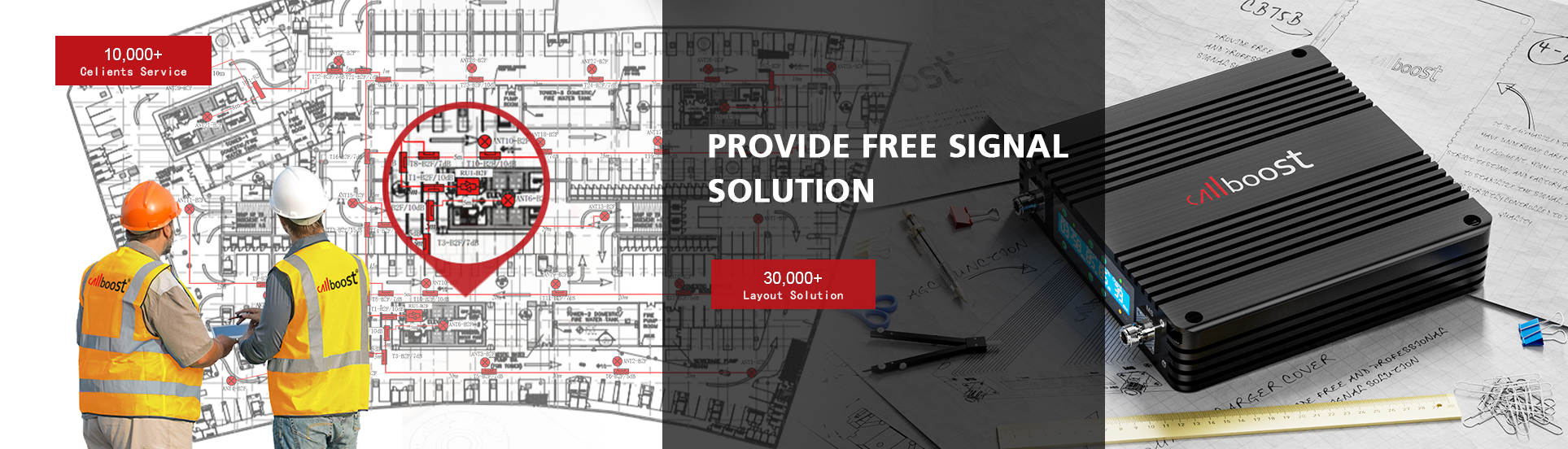
Indoor mobile coverage is no longer just a convenience issue. For many business buildings, stable 4G and 5G signal has become part of the basic operating infrastructure.
In offices, hotels, shopping malls, factories, warehouses and underground parking areas, people rely on mobile networks for calls, mobile payment, visitor communication, delivery coordination, maintenance work, security patrols and real-time data access. When the indoor signal is weak, the problem is not only poor phone reception. It can also affect business efficiency, customer experience and daily site management.
Industry reports show that the indoor 5G market is growing quickly as enterprises, smart buildings and high-traffic venues require faster and more reliable indoor connectivity. This trend is simple: outdoor network coverage alone is no longer enough. Modern buildings need dedicated indoor mobile signal coverage planning.
Why Indoor 5G Coverage Is Becoming More Important
Many people assume that if 5G coverage exists outdoors, the indoor signal should also be good. In real projects, this is often wrong.
Mobile signals can be seriously weakened by reinforced concrete, metal structures, thick walls, energy-saving glass, underground floors and complex building layouts. In large commercial buildings, even a strong outdoor signal may become unstable after passing through several walls or floors.
This is especially common in:
Office towers
Hotels and serviced apartments
Shopping malls
Warehouses and logistics centers
Factories and industrial buildings
Hospitals and public buildings
Underground parking areas
Basements and equipment rooms
Villas and large residential buildings
For business users, the real requirement is not only “more signal bars”. The real requirement is stable communication across important indoor areas.
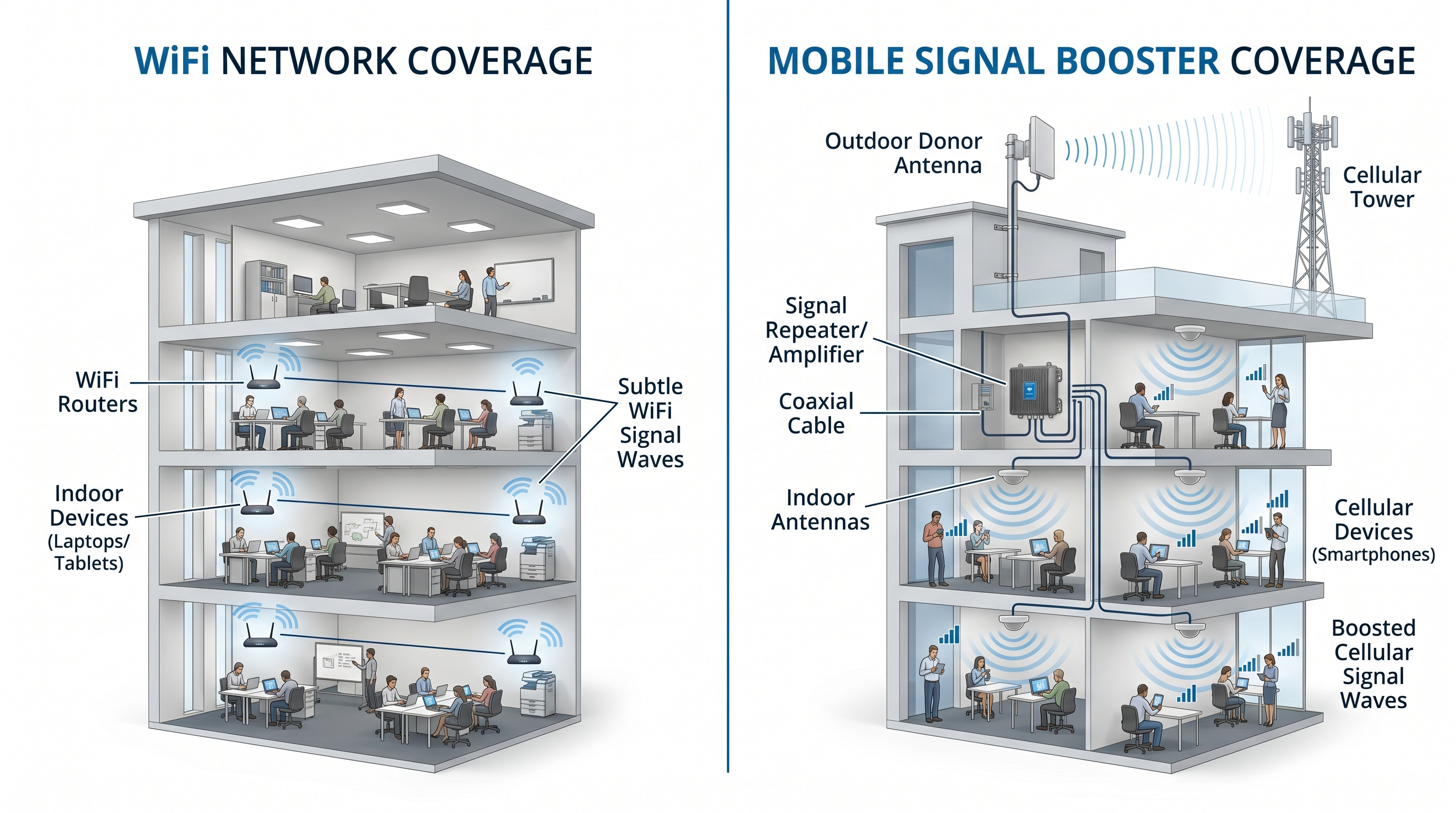
WiFi Cannot Fully Replace Mobile Signal Coverage
WiFi is important, but it does not solve every communication problem inside a building.
WiFi depends on access permission, router layout, network capacity and user connection settings. Visitors, customers, drivers, temporary workers and maintenance teams may not have access to the building WiFi. Even when WiFi is available, phone calls, SMS verification, mobile data backup and operator-based communication still depend on cellular networks.
A professional indoor mobile signal booster system is different from WiFi. It improves the operator’s mobile signal inside the building by receiving outdoor cellular signal, amplifying it through a repeater and distributing it through indoor antennas.
In many business buildings, WiFi and mobile signal coverage should work together. WiFi supports local internet access, while a mobile signal booster system improves 4G and 5G cellular communication.
What an Indoor Mobile Signal Booster System Includes
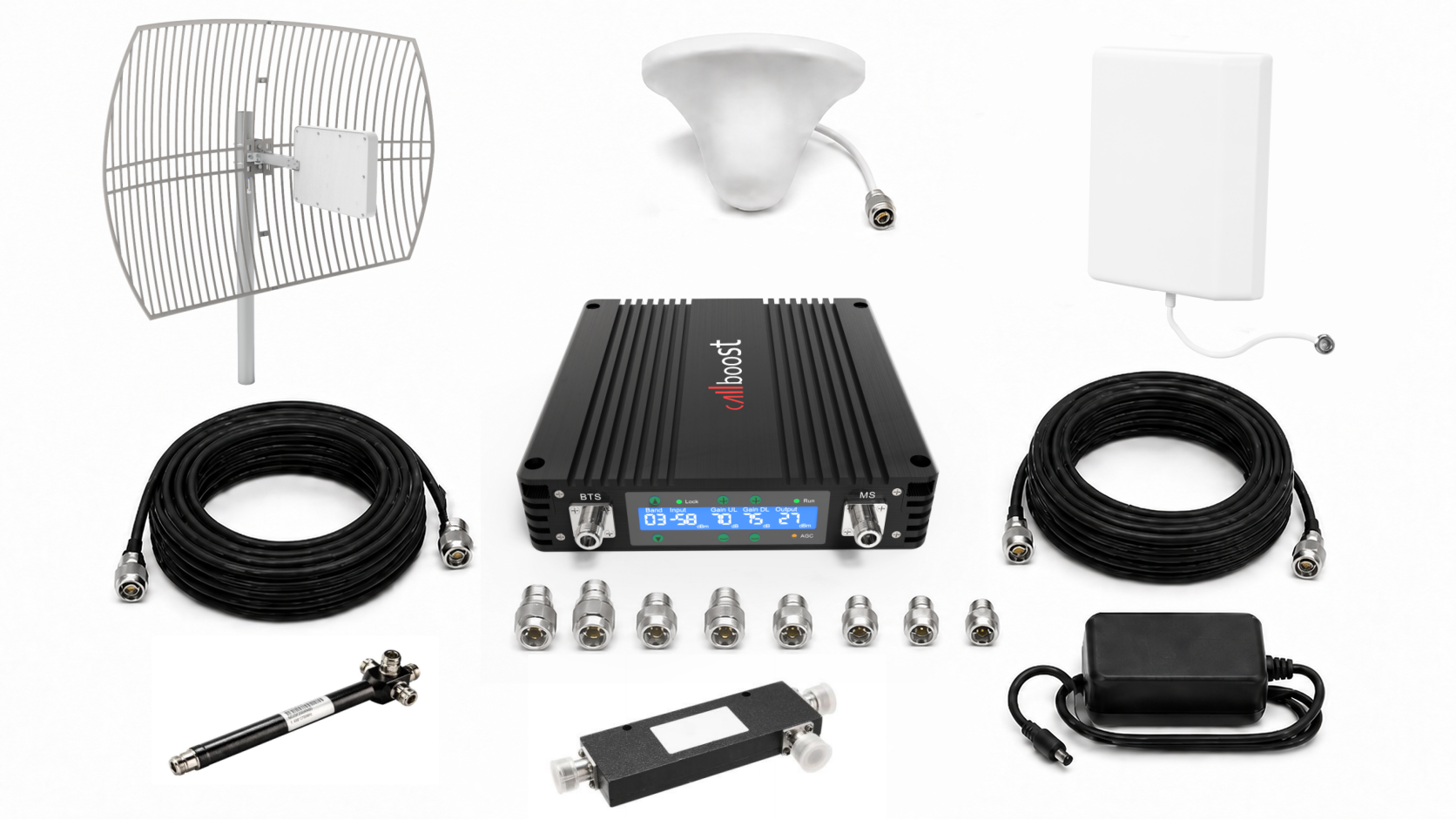
A complete indoor [mobile signal booster] solution is not just one device. It is a system.
A typical system may include:
Outdoor donor antenna
Signal repeater
Indoor ceiling antenna
Indoor panel antenna
Coaxial cables
Power splitter
Directional coupler
Lightning protector
RF connectors
Power adapter or power supply
The outdoor antenna receives the available mobile signal from the operator’s base station. The repeater amplifies and controls the signal. Indoor antennas then distribute the improved signal to the target coverage areas.
For a small site, the system may be simple. For a larger building, the design may require multiple antennas, splitters, couplers, different cable lengths and careful antenna placement.
This is why professional design matters. If the antenna layout is wrong, the system may create uneven coverage, signal overload or self-oscillation. A good system should improve coverage while keeping the network clean and stable.
Callboost Solutions for Different Building Sizes
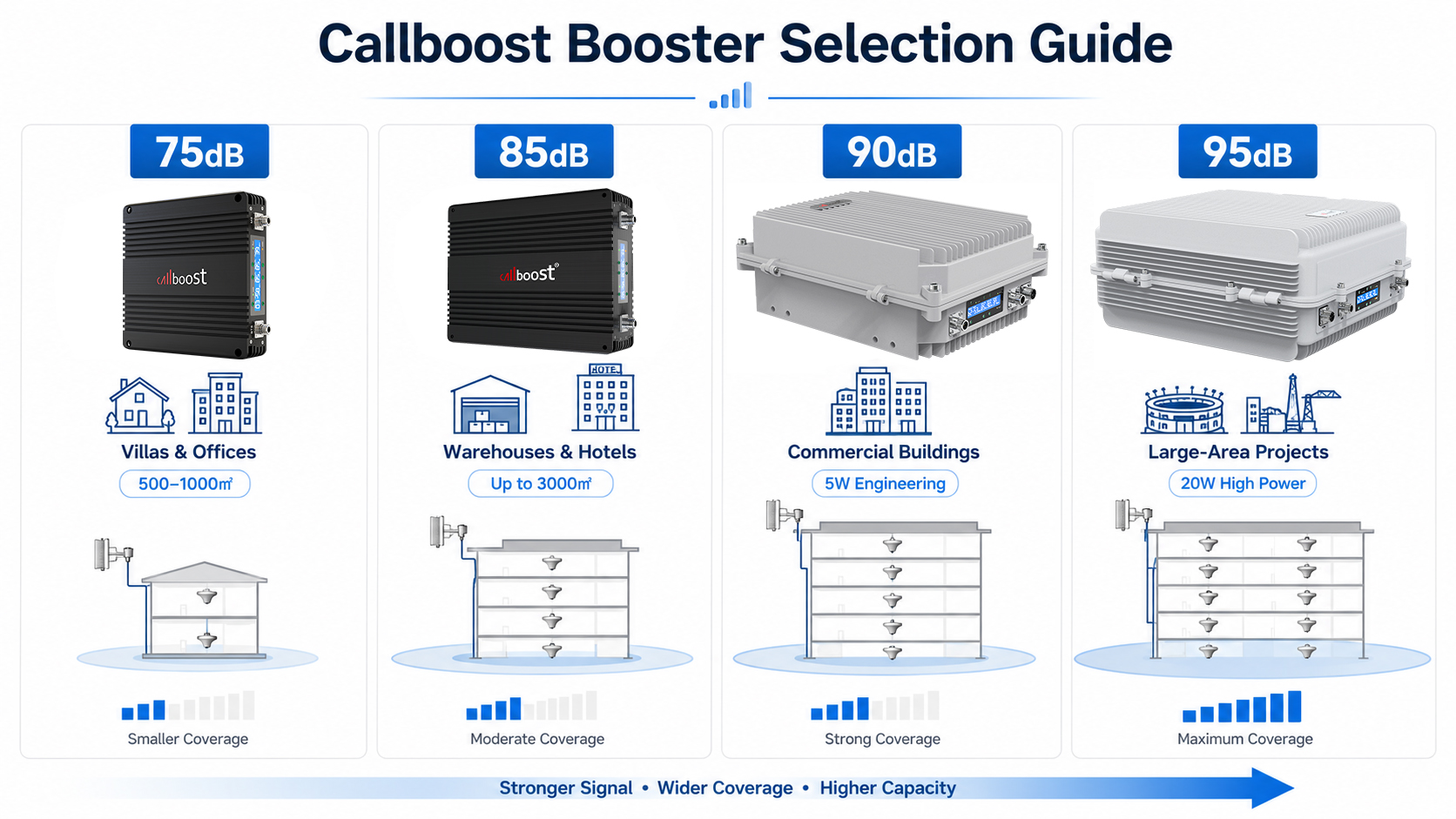
Callboost provides different levels of mobile signal booster products for different project environments. The correct choice depends on the building structure, coverage area, outdoor signal condition, frequency band, antenna quantity and cable loss.
For medium indoor coverage projects, [Callboost 75dB series signal boosters] are commonly used in homes, offices, shops and other medium-sized indoor spaces. In many projects, this level can support around 500–1000㎡ coverage, depending on real installation conditions.
For larger business buildings, warehouses, hotels and commercial spaces, [Callboost 85dB series repeaters] provide a higher engineering level. They are suitable when the project requires more indoor antennas, longer cable routes or stronger system capacity.
For more demanding engineering projects, Callboost also provides [90dB signal repeater series],[95dB signal repeater series].These are designed for larger areas, more complex layouts and higher-power coverage requirements.
For long-distance or distributed coverage projects, Callboost CR90F and CR95F digital fiber optical repeaters can be used. This type of solution adopts MU and RU architecture, transmitting RF signal through optical fiber. It is suitable for villages, tunnels, mines, large parks, underground areas and other projects where traditional coaxial cable systems are not efficient enough.
For projects that require more precise frequency control, Callboost bandwidth adjustable repeaters can support adjustable frequency and bandwidth, local or remote monitoring, ALC control and more flexible engineering configuration.
Why Professional System Design Is More Important Than Only Choosing Power
A common mistake is to judge a mobile signal booster only by gain or output power. In real indoor projects, higher power does not always mean better performance.
A suitable system must consider:
Available outdoor signal strength
Operator frequency bands
4G or 5G coverage requirement
Building size and floor layout
Wall and glass structure
Cable length and cable loss
Indoor antenna quantity
Antenna isolation
Future expansion needs
For example, a warehouse with metal structures may need a different antenna layout from a hotel. An underground parking area may require directional panel antennas and ceiling antennas in different zones. A high-rise office building may need multi-floor planning rather than one high-power repeater.
[Callboost focuses on complete signal coverage solutions] instead of only selling a single amplifier. The goal is to match the correct repeater, antenna type and passive components according to the real project environment.
Key Callboost Features for Stable Indoor Coverage
Callboost mobile signal booster systems are designed for practical engineering use. Depending on the model, the system may include features such as:
Real-time isolation detection
Self-excitation elimination
Automatic shutdown protection
Uplink sleep mode
Manual gain control
Automatic level control
Low noise design
Aluminum alloy heat dissipation casing
LCD or OLED display
Local or remote monitoring for selected engineering models
These features help the system stay stable after installation. They also help reduce unnecessary interference to the operator’s base station.
For business buildings, this is important. A signal booster should not only make the indoor signal stronger. It should also work safely, reliably and continuously.
Typical Applications
Callboost indoor 4G and 5G coverage solutions can be used in many commercial and engineering environments, including:
Office buildings
Hotels
Shopping malls
Warehouses
Factories
Underground parking areas
Hospitals
Schools
Villas
Tunnels
Mining areas
Remote buildings
Large residential communities
Each project should be evaluated separately. The same repeater model may perform differently in different buildings because signal conditions and installation environments are never exactly the same.
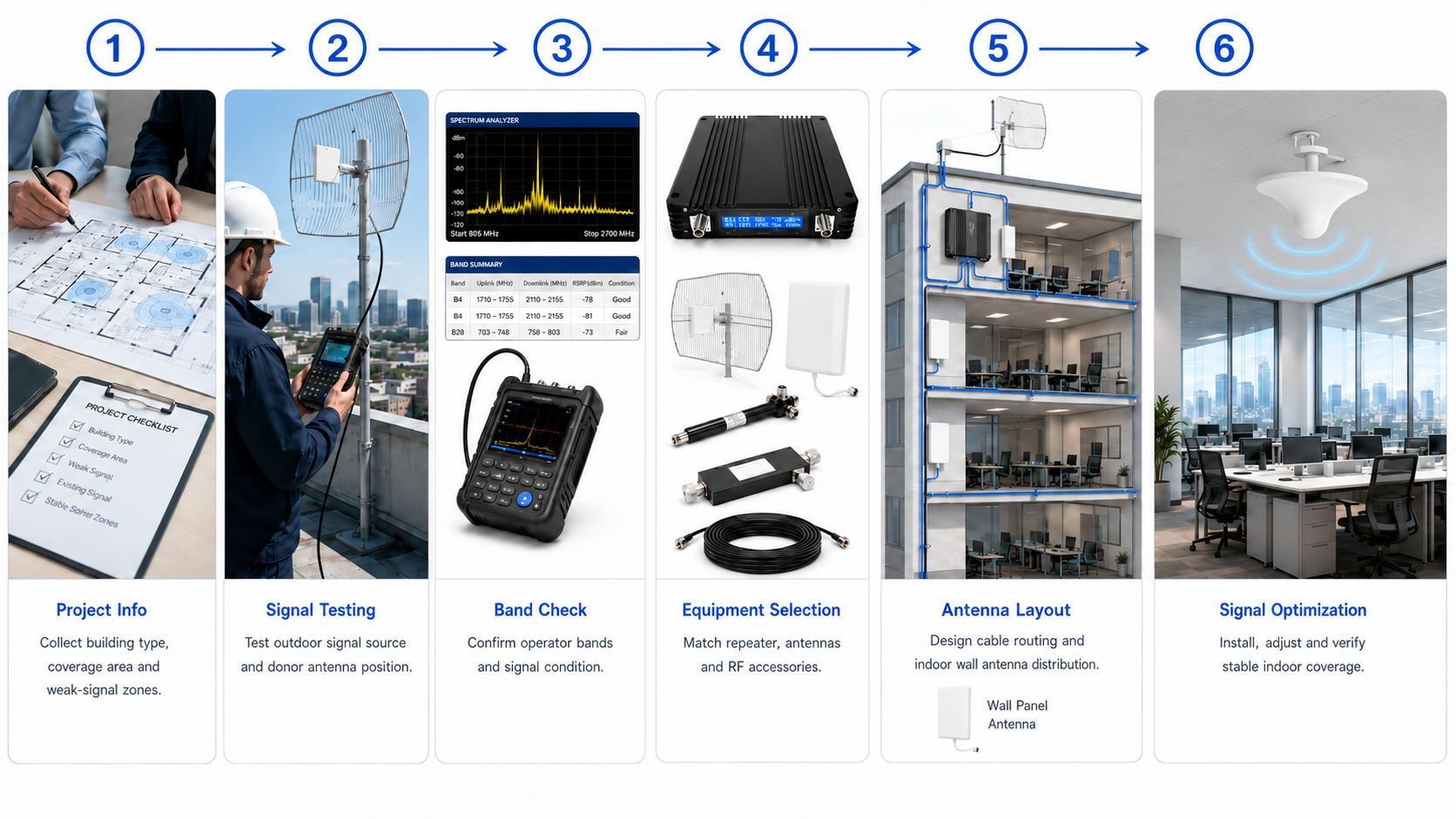
How to Start an Indoor 5G Coverage Project
Before recommending a solution, Callboost usually needs to confirm several project details:
Country and operator
Required 4G or 5G frequency bands
Outdoor signal strength
Building type and coverage area
Number of floors
Wall structure and weak signal areas
Available installation location for outdoor antenna
Indoor antenna quantity and layout requirement
Whether future expansion is needed
With this information, Callboost can help select the proper signal repeater, donor antenna, indoor antennas, cables and passive components.
For simple projects, a standard signal booster kit may be enough. For larger buildings, Callboost can provide customized product selection and antenna layout suggestions.
Conclusion
Indoor 5G coverage is becoming a real business requirement for modern buildings. As more daily operations depend on mobile data, calls, payment systems, logistics communication, security work and smart devices, weak indoor signal is no longer a small inconvenience.
A professional mobile signal booster system can help improve indoor 4G and 5G coverage when an outdoor signal source is available. But the best result depends on correct product selection, antenna layout and project design.
Callboost provides mobile signal boosters, engineering repeaters, fiber optical repeaters, bandwidth adjustable repeaters, antennas and RF accessories for different indoor coverage projects.
If you need a 4G or 5G indoor coverage solution for a commercial building, warehouse, hotel, factory, underground parking area or large residential project, contact Callboost for a professional signal solution.